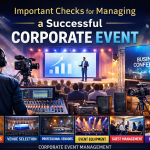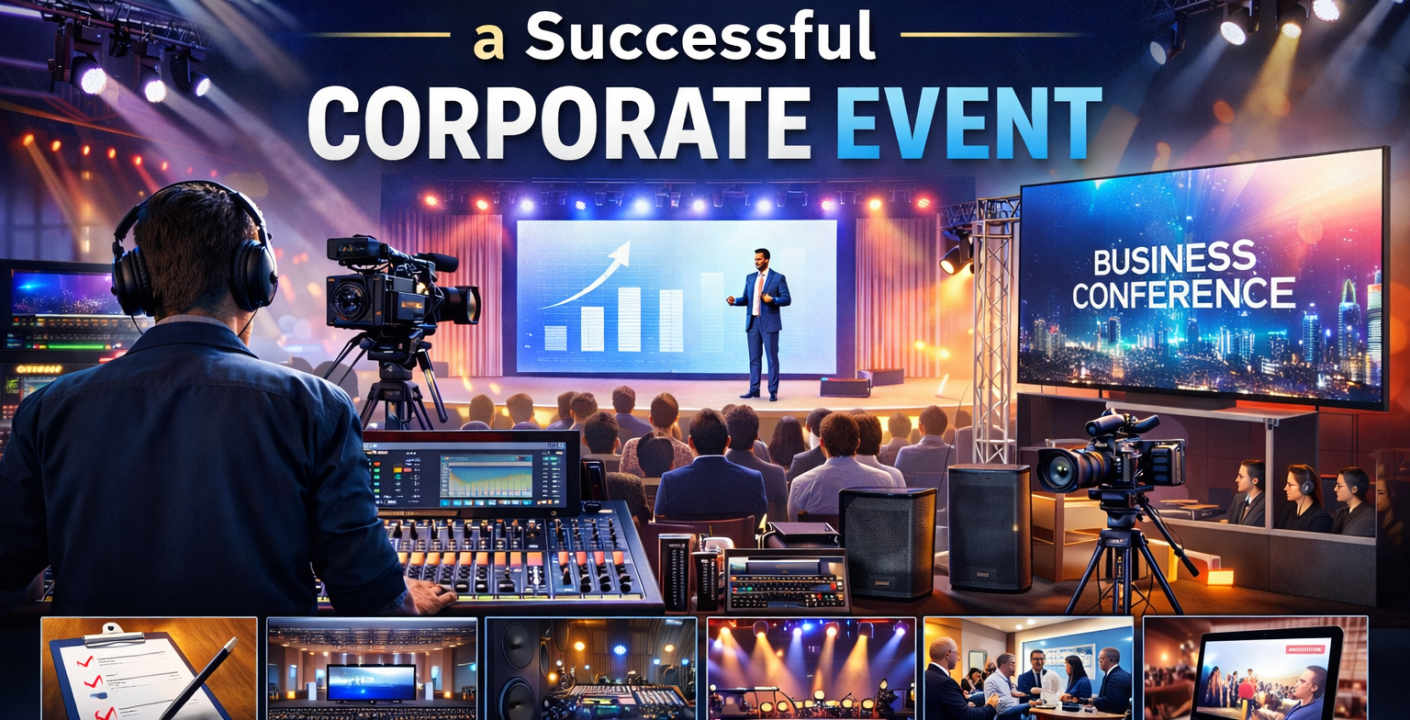
Corporate events are a powerful tool for businesses. Companies organize corporate events to promote their brand, connect with clients, train employees, and launch new products. In today’s competitive business world, a well-managed corporate event can create a strong impact and improve a company’s reputation.
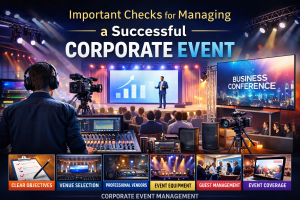
However, organizing a corporate event is not easy. It requires proper planning, experienced vendors, professional equipment, and careful management. Even small mistakes can affect the success of an event.
This is why event managers follow a checklist before organizing any corporate event. These important checks help ensure that the event runs smoothly and delivers the expected results.
In this blog, we will discuss the important checks for managing a corporate event successfully and why they are essential for every business event.
Understanding Corporate Event Management
Corporate event management is the process of planning, organizing, and executing professional events for companies and organizations.
These events can include:
-
Conferences
-
Seminars
-
Product launches
-
Corporate meetings
-
Exhibitions
-
Award ceremonies
-
Networking events
-
Corporate dinners
Each corporate event requires careful coordination of different services such as venue selection, event design, sound systems, LED screens, stage lighting, branding, and event coverage.
Because of these requirements, corporate event management demands a professional approach.
Important Checks Before Managing a Corporate Event
Below are the most important checks that every event manager should follow when organizing a corporate event.
1. Clear Event Objectives
The first and most important step in corporate event management is defining the event objective.
Every corporate event has a purpose. For example:
-
Product launch events promote new products.
-
Corporate conferences share industry knowledge.
-
Annual meetings review company performance.
-
Award ceremonies celebrate achievements.
Understanding the objective helps the event team plan everything correctly.
For example, a product launch event may require large LED screens, dynamic lighting, and strong branding. On the other hand, a training seminar may require clear audio systems and presentation screens.
Therefore, defining the event objective is the foundation of successful corporate event planning.
2. Budget Planning
Budget planning is another critical check for corporate events.
Corporate events often involve many services, such as:
-
Venue rental
-
Stage setup
-
Sound system
-
LED screens
-
Lighting equipment
-
Branding materials
-
Catering services
-
Photography and videography
Without a proper budget plan, costs can increase quickly.
A professional event manager always creates a detailed budget before starting the event planning process. This ensures that resources are used efficiently and unnecessary expenses are avoided.
3. Selecting the Right Venue
Venue selection plays a major role in the success of a corporate event.
The venue should match the nature and size of the event. Important factors to consider include:
-
Location accessibility
-
Parking availability
-
Seating capacity
-
Power supply
-
Internet connectivity
-
Stage space
-
Lighting conditions
For example, a corporate conference requires a venue with good acoustics and presentation facilities. Similarly, exhibitions require large open spaces for stalls and displays.
Choosing the right venue helps create a comfortable experience for guests and participants.
4. Hiring Professional Event Vendors
Corporate events require specialized services and equipment. Therefore, hiring professional event vendors is essential.
Professional event vendors provide services such as:
-
LED screen rental
-
Sound system setup
-
Stage lighting installation
-
Event staging and trussing
-
Branding and printing
-
Live streaming services
Experienced vendors understand the technical requirements of corporate events and ensure that everything works smoothly.
Working with reliable vendors reduces technical problems and improves event quality.
5. High-Quality Event Equipment
Modern corporate events rely heavily on technology. Therefore, high-quality equipment is essential.
Some important equipment used in corporate events includes:
LED Screens
LED screens are used to display presentations, videos, and live event coverage. They help ensure that every guest can see the content clearly.
Sound Systems
Clear sound is crucial for speeches, presentations, and panel discussions. Professional sound systems ensure that the audience can hear every word without distortion.
Stage Lighting
Lighting enhances the appearance of the stage and creates a professional atmosphere. It also improves video recording and photography quality.
Trussing and Stage Structures
Trussing structures support lighting equipment, screens, and branding elements. A well-designed stage structure improves the overall event presentation.
6. Event Branding and Design
Corporate events are also branding opportunities. Companies want their brand identity to be visible throughout the event.
Event branding may include:
-
Stage backdrops
-
Welcome stands
-
Digital displays
-
Direction signage
-
Exhibition stalls
-
Registration desks
Creative branding designs help reinforce the company’s image and make the event visually attractive.
Good branding also makes the event more memorable for attendees.
7. Event Program and Schedule
A clear event schedule is essential for smooth event management.
The program should include:
-
Guest arrival time
-
Registration process
-
Opening ceremony
-
Speaker sessions
-
Panel discussions
-
Networking breaks
-
Closing ceremony
Event managers must ensure that each activity starts and ends on time.
Time management is very important in corporate events because business guests usually have limited time.
8. Technical Rehearsal
One of the most important checks before a corporate event is technical rehearsal.
A rehearsal helps test all event equipment and systems, including:
-
Sound systems
-
LED screens
-
Lighting setups
-
Microphones
-
Presentation slides
-
Live streaming equipment
Testing everything before the event helps identify potential problems and fix them early.
Professional event companies always conduct rehearsals to ensure a flawless event experience.
9. Guest Management and Registration
Guest management is another key part of corporate event planning.
This includes:
-
Invitation management
-
Guest registration
-
Welcome desk setup
-
Seating arrangements
-
VIP guest handling
A well-organized registration system ensures that guests enter the venue smoothly without delays.
Digital registration systems are also becoming popular in modern corporate events.
10. Security and Safety Arrangements
Security is a very important aspect of corporate events.
Event managers must ensure:
-
Crowd control
-
Emergency exits
-
Fire safety measures
-
Security personnel
-
Medical support if required
Proper safety arrangements help protect guests and ensure that the event runs smoothly.
11. Event Coverage and Live Streaming
Corporate events are often recorded for marketing and documentation purposes.
Event coverage includes:
-
Professional photography
-
Videography
-
Live streaming on social media
-
Highlight videos for marketing
Live streaming allows people who cannot attend the event to watch it online.
This also increases the reach of the event and promotes the company’s brand.
12. Post Event Evaluation
After the event is completed, it is important to review the event performance.
Post-event evaluation may include:
-
Feedback from attendees
-
Vendor performance review
-
Budget analysis
-
Event impact assessment
This evaluation helps companies improve their future events.
Learning from each event helps create better and more professional corporate events in the future.
Why Professional Event Management Matters
Many companies try to organize corporate events on their own. However, professional event management companies bring valuable experience and expertise.
They provide complete event solutions including:
-
Event planning
-
Technical setup
-
Equipment rental
-
Vendor coordination
-
On-site event management
Professional event management ensures that every detail is handled properly.
This allows companies to focus on their guests and business objectives.
The Growing Importance of Corporate Events
Corporate events are becoming more important in today’s business world.
Companies use events to:
-
Build relationships with clients
-
Promote products and services
-
Improve brand visibility
-
Train employees
-
Strengthen company culture
Because of these benefits, corporate events have become a key marketing and communication tool for businesses.
Conclusion
Managing a successful corporate event requires careful planning, professional vendors, and reliable equipment. From defining event objectives to conducting technical rehearsals, every step plays an important role in event success.
By following the important checks discussed in this guide, companies can organize corporate events that are professional, engaging, and memorable.
Corporate events are not just gatherings. They are powerful opportunities to build relationships, promote brands, and create lasting impressions.
With proper event management and attention to detail, businesses can turn corporate events into valuable experiences for both their company and their guests.